

Program IV:
ECCO Jubilee
Saturday, August 22 | 7:00 PM
Stevens Square Theater | Portland
Happy birthday, East Coast Chamber Orchestra! PCMF is delighted to take part in this extraordinary ensemble’s 25th anniversary season. Edvard Grieg's beloved Holberg Suite, a stylized set of French Baroque dances, opens the festivities with neoclassical elegance and wit. Every great party needs a little drama, here provided by Franz Liszt's sensational tone poem "Malédiction," followed by an intriguing violin duo. Antonín Dvořák's radiant Serenade for Strings sends off the season with a big, warm, exuberant embrace, filled with melodies that are among the greatest joys in all of chamber music.
PROGRAM
Edvard Grieg Holberg Suite, Op. 40
East Coast Chamber Orchestra
Franz Liszt Concerto for Piano and Strings in E Minor, 'Malédiction'
Henry Kramer, piano; East Coast Chamber Orchestra
Jessie Montgomery Musings
Ayano Ninomiya and Susie Park, violins
Antonín Dvořák Serenade for Strings
East Coast Chamber Orchestra with Anthony Marwood, violin
Programs and artists subject to change
TICKETS
$85 (reserved seating SOLD OUT) / $48 (general admission) $12 (children & students)
VENUE
Stevens Square Theater
Stevens Square Community Center
631 Stevens Ave, Portland ME
PARKING
Free parking on site, click for details.
PROGRAM
NOTES
RUN TIME
Just under two hours including intermission
Meet The Artists

Efe Baltacigil
cello

Maurycy Banaszek
viola

Lingyu Dong
violin

Nate Farrington
bass

Michael Katz
cello

Min-Young Kim
violin

Henry Kramer
piano

Kobi Malkin
violin

Anthony Marwood
violin
.jpeg)
Ayano Ninomiya
violin
_edited.jpg)
Susie Park
violin

Annaliesa Place
violin

Raman Ramakrishnan
cello
_edited.jpg)
Melissa Reardon
viola

Dorothy Ro
violin

Jessica Thompson
viola
Meet The Composers

Edvard Grieg
1843-1907
Edvard Grieg was a Norwegian composer and pianist of the Romantic era, best known for bringing Norwegian folk music into classical music tradition. Grieg studied music at the Leipzig Conservatory in Leipzig, where he was influenced by Romantic composers such as Schumann and Mendelssohn. After returning to Norway, he became a central figure in developing a national style of music.
He spent much of his life in Oslo (then called Christiania) and later near Bergen, where he composed many of his most important works. His music is known for its lyrical melodies, rich harmonies, and strong connection to Norwegian folk traditions. Among his best-known compositions are the Piano Concerto in A minor, the incidental music to Peer Gynt, and his collection of Lyric Pieces.
Grieg is regarded as Norway’s most important classical composer, and his music remains widely performed and admired for its warmth, lyricism, and national character.
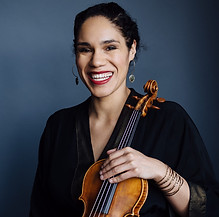
Jessie Montgomery
b. 1981
Jessie Montgomery is an American composer, violinist, and educator whose music blends classical tradition with elements of vernacular music, improvisation, and social themes. She was born in 1981 in New York City and grew up in a musical and artistic environment that strongly influenced her creative path.
Montgomery studied violin and composition at the Juilliard School and later earned a graduate degree in film scoring from New York University. As a violinist, she has performed with ensembles such as the Sphinx Virtuosi, helping promote diversity in classical music.
Her compositions often reflect themes of identity, justice, and community. Notable works include Starburst, Strum, and Banner, the latter of which was inspired by the U.S. national anthem and the voices of different American communities.
Montgomery has received wide recognition as one of the leading American composers of her generation and has held residencies with major orchestras, including the Chicago Symphony Orchestra. Her work is frequently performed across the United States and internationally.

Franz Liszt
1811-1886
Franz Liszt was a Hungarian composer, virtuoso pianist, conductor, and teacher of the Romantic era, widely regarded as one of the greatest pianists in history. Liszt showed extraordinary musical talent early and began performing publicly as a child. He later studied in Vienna with teachers who had also worked with Beethoven and other leading composers. As a young adult, he became one of Europe’s first true “superstar” performers, touring widely and astonishing audiences with his technical brilliance.
After retiring from the concert stage in the 1840s, Liszt focused on composing, conducting, and teaching. He lived for much of his life in Weimar, where he developed the symphonic poem and supported new music by composers such as Richard Wagner. His most famous works include the piano pieces Hungarian Rhapsodies, the virtuosic Piano Sonata in B minor, and orchestral works like Les Préludes.

Antonín Dvořák
1841-1904
Antonín Dvořák was a Czech composer who frequently employed rhythms and other aspects of the folk music of Moravia and his native Bohemia in his work, following the Romantic-era nationalist example of his predecessor Bedřich Smetana. Dvořák's style has been described as "the fullest recreation of a national idiom with that of the symphonic tradition, absorbing folk influences and finding effective ways of using them."
Reflecting Dvořák’s growing interest in folk music, the sextet blends lyrical melodies with Bohemian dance rhythms, particularly in the dumka and furiant-inspired movements. It was one of his first works to gain international acclaim and marked a turning point in his career. The piece showcases Dvořák’s gift for melodic invention, rhythmic vitality, and warm harmonic color, making it a staple in the string chamber music repertoire and a testament to his early mastery.
Concert Sponsors


