Program I:
Great Explorations
Thursday, August 13 | 7:00 PM
Stevens Square Theater | Portland
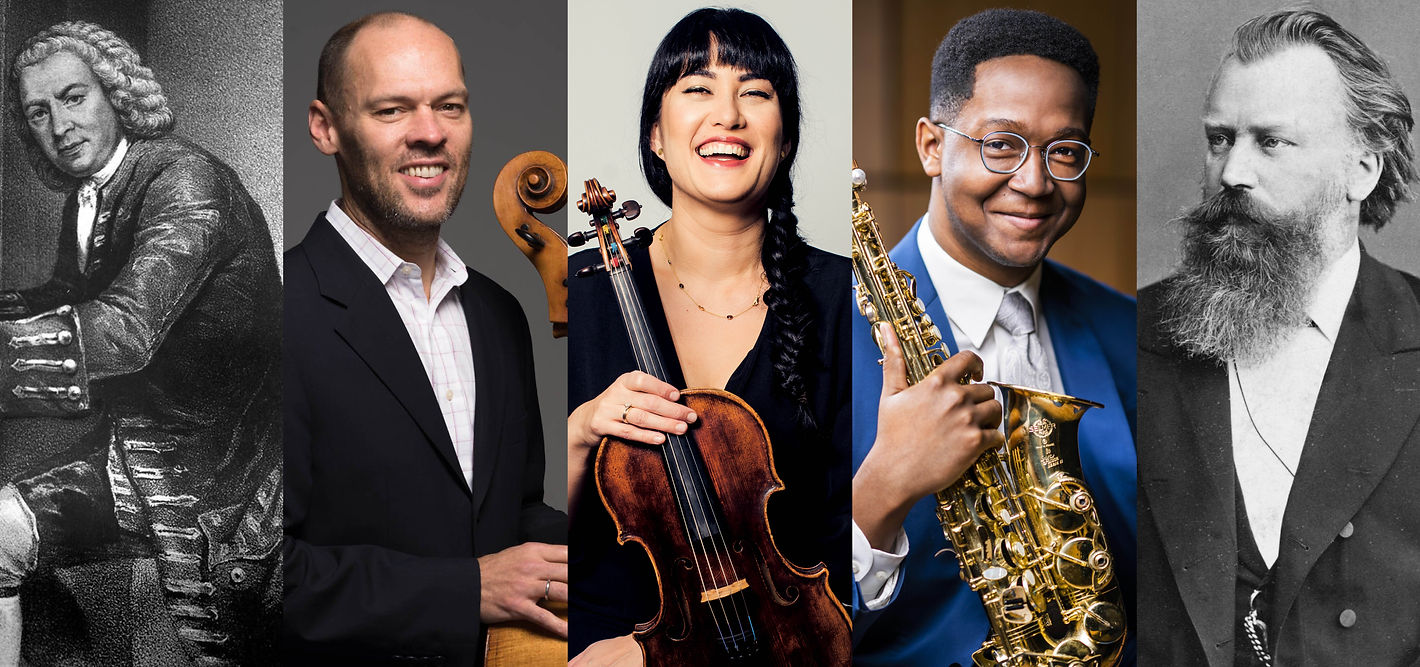
Explore three centuries of chamber music in one unforgettable evening. Mozart's remarkably inventive Duo, written as a favor to a colleague, stand as a testament to friendship as much as craft. Charles Loeffler's hauntingly beautiful Deux Rhapsodies follows, reimagined with soprano saxophone in place of oboe, giving a velvety texture to its impressionistic shadows. This glorious opening night program culminates in a masterful piano quartet by Johannes Brahms — turbulent, tender, and utterly transcendent.
PROGRAM
W.A. Mozart Duo in G Major for Violin and Viola, K. 423
Tien-Hsin Cindy Wu, violin; Melissa Reardon, viola
Coleridge-Taylor Perkinson Louisiana Blues Strut
Tien-Hsin Cindy Wu, violin
Charles Loeffler Deux Rhapsodies
Melissa Reardon, viola; Steven Banks, saxophone; Ran Dank, piano
Johannes Brahms Piano Quartet No. 1 in G Minor, Op. 25
Tien-Hsin Cindy Wu, violin; Melissa Reardon, viola; Brant Taylor, cello; Ran Dank, piano
Programs and artists subject to change
TICKETS
$85 (reserved seating SOLD OUT) / $48 (general admission) $12 (children & students)
VENUE
Stevens Square Theater
Stevens Square Community Center
631 Stevens Ave, Portland ME
PARKING
Free parking on site, click for details.
PROGRAM
NOTES
RUN TIME
Just under two hours including intermission
Meet The Artists
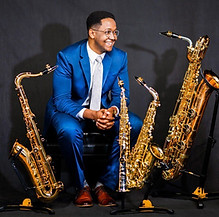
Steven Banks
saxophone
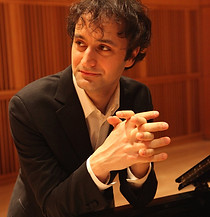
Ran Dank
piano
_edited.jpg)
Melissa Reardon
viola
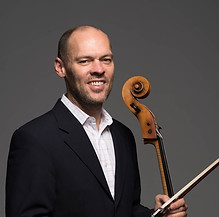
Brant Taylor
cello

Tien-Hsin Cindy Wu
violin
Meet The Composers

Wolfgang Amadeus Mozart
1756–1791
Wolfgang Amadeus Mozart was born in Salzburg, Austria, to a musical family that recognized his prodigious gifts early: by age five he was composing, and by six he was touring Europe's courts as a keyboard virtuoso alongside his sister, Nannerl. Over a career spanning barely three decades, he produced more than 600 works of extraordinary emotional depth and structural clarity. He eventually broke from provincial Salzburg for Vienna, where he composed some of his greatest masterpieces despite financial instability. He died at 35, leaving his Requiem unfinished. His influence on Western music is immeasurable.
Mozart composed this charming work during a visit to Salzburg, as a favor to his friend Michael Haydn. Haydn, ill and behind on a commission from the Archbishop for six violin-viola duos, risked losing his post; Mozart quietly wrote two (K. 423 and K. 424) and let them pass as Haydn's own. This piece, K. 423, speaks directly to central Mozartian concerns of the early 1780s: concision, clarity of texture, and the theatrical idea of music as dialogue. The three movements—a graceful Allegro, a searching Adagio, and a spirited rondo finale—reveal remarkable invention (especially within the constraint of only two instruments), and stand as a testament to friendship as much as craft.
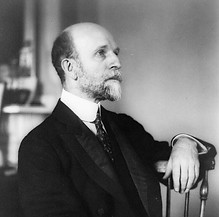
Charles Martin Loeffler
1861-1935
Charles Martin Loeffler was a Franco-American composer, violinist, and conductor known for blending French, German, and American musical influences. He was born on January 30, 1861, in Schöneberg (now part of Berlin). Although German-born, he later claimed an Alsatian-French identity because of his dislike of German militarism.
Loeffler studied violin and composition in Berlin and Paris before emigrating to the United States in 1881. He became first assistant concertmaster of the Boston Symphony Orchestra in 1882 and held the position for many years.
As a composer, Loeffler was admired for his refined orchestration and atmospheric style, influenced by French Impressionism and Symbolist literature. His notable works include A Pagan Poem and Music for Four Stringed Instruments. Though never as widely known as some contemporaries, he played an important role in American classical music during the late 19th and early 20th centuries.
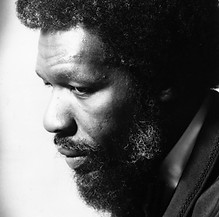
Coleridge-Taylor Perkinson
1932-2004
Coleridge-Taylor Perkinson was an American composer, conductor, and pianist known for blending classical music with jazz, blues, spirituals, and popular music traditions.
Born in 1932 and named after the Black British composer Samuel Coleridge-Taylor, he studied at the Manhattan School of Music and later became a prominent figure in both concert and popular music. Perkinson co-founded the Symphony of the New World, served as music director for the Alvin Ailey American Dance Theater, and worked with artists such as Max Roach, Marvin Gaye, and Harry Belafonte.
His works include chamber music, orchestral compositions, film scores, and dance pieces, reflecting his wide-ranging musical interests and innovative style.
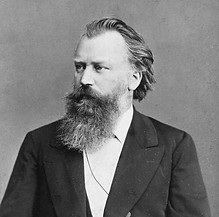
Johannes Brahms
1833-1897
Johannes Brahms was a German composer and pianist of the Romantic era, renowned for his symphonies, concertos, chamber works, piano pieces, choral compositions, and over 200 songs. Born in Hamburg, he gained early recognition with support from Robert and Clara Schumann. Brahms's music is celebrated for its structural mastery and emotional depth, blending classical traditions with Romantic expressiveness. He spent much of his career in Vienna, where he became a central figure in the musical community. His works, including the German Requiem and four symphonies, remain staples of the classical repertoire.
Brahms composed his String Sextet No. 2 in G major, Op. 36, between 1864 and 1865. Scored for two violins, two violas, and two cellos, the work is structured in four movements: Allegro non troppo, Scherzo (Allegro non troppo – Presto giocoso), Poco adagio, and Poco allegro. Notably, Brahms embedded the name of his former love, Agathe von Siebold, into the music through a musical motif spelling "Agathe" . The sextet premiered in Boston on October 11, 1866, and is celebrated for its rich textures and emotional depth.
Concert Sponsors